Japanese Business Etiquette: Why “5-Minute Prior Action” Matters
Surprising Time Culture in Japan
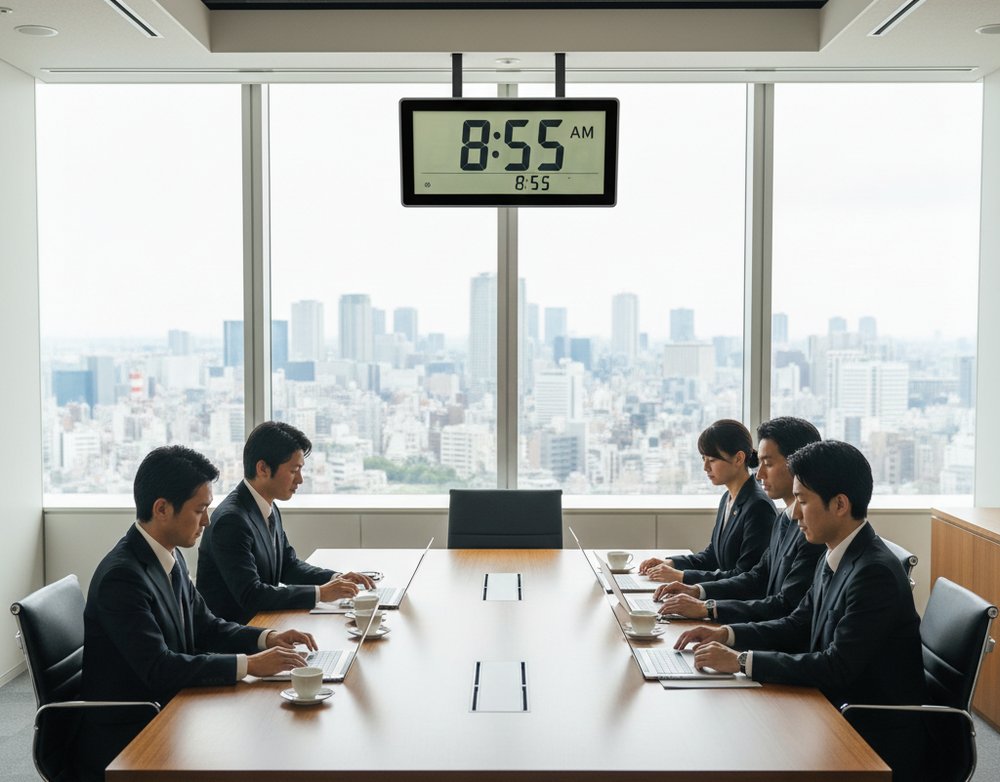
Many foreigners working in Japan are surprised by the strict sense of time—especially the practice called “5-Minute Prior Action.” If a meeting starts at 9:00, Japanese professionals are usually ready by 8:55, not exactly at 9:00. In many countries, arriving on time or even a few minutes late is acceptable. In Japan, arriving exactly at 9:00 can feel like being late.
What Does “5-Minute Prior Action” Mean?
It’s not just about arriving early. It means being fully prepared to start on time. For a 9:00 meeting, you should finish checking documents and setting up your laptop by 8:55. This practice has roots in Japan’s modernization and the strict discipline of the Imperial Navy, which influenced business culture.
A Rule for Group Harmony
Japanese society values harmony (Wa) and avoiding inconvenience to others. If one person is late, everyone waits, and the group loses time. Arriving early sends a message: “I respect everyone’s time and the team’s efficiency.”
A Key to Building Trust
Understanding and applying this practice gives you a big advantage in Japan. If you arrive 5 minutes early and are ready to start, people see you as professional and trustworthy. On the other hand, arriving at the last minute—or late—can damage your credibility, no matter your skills. Of course, unexpected delays happen, but in Japan, being early is a sign of respect and reliability.